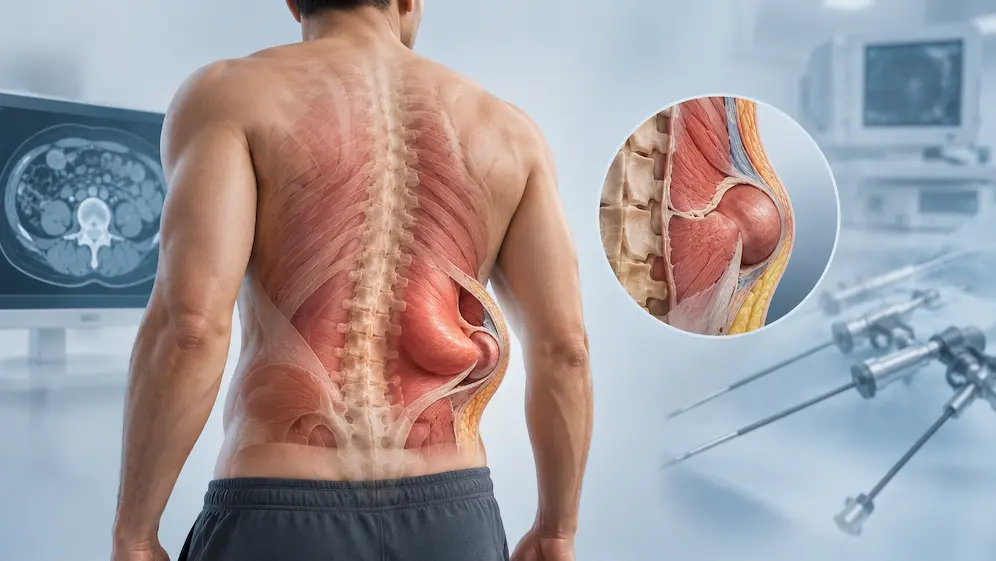
A hernia occurs when an internal organ or tissue pushes through a weakened area in the surrounding muscle or connective tissue. While many people are familiar with groin or abdominal hernias, lumbar hernia is a much less common type that develops through a weak area in the posterior abdominal wall.
As lumbar hernias are relatively uncommon, their symptoms can sometimes be mistaken for other causes of back, flank, or abdominal discomfort. A swelling in the lower back or side of the abdomen may initially appear harmless, particularly if it disappears when lying down. However, an untreated hernia can gradually increase in size and may occasionally lead to complications.
Understanding the symptoms, causes, diagnostic process, and available treatment options can help patients seek appropriate medical attention at the right time. Modern hernia surgery has also evolved considerably, with minimally invasive techniques offering suitable patients smaller incisions, reduced postoperative discomfort, and faster recovery. Whether a lumbar hernia requires observation or surgical correction depends on its size, symptoms, location, underlying cause, and risk of complications. A specialist evaluation is therefore essential before deciding on treatment.
For individuals looking for hernia treatment in Thrissur, access to experienced surgeons and advanced minimally invasive surgical facilities can make the treatment journey safer, more comfortable, and more predictable.
What Is a Lumbar Hernia?
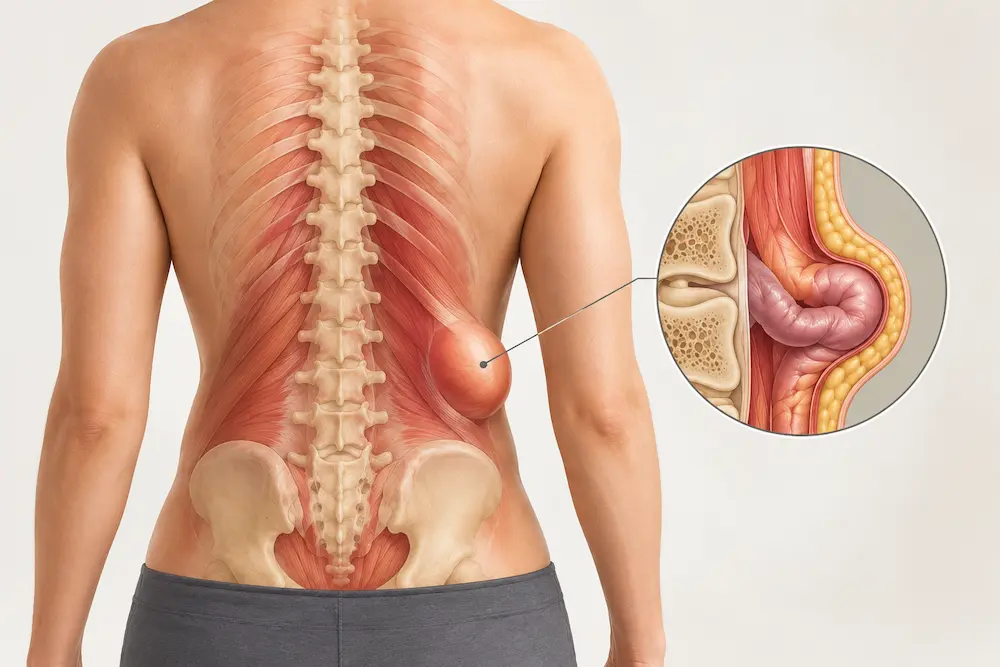
A lumbar hernia is a rare type of hernia that occurs through a weakness or defect in the posterior abdominal wall in the lumbar region, which is the area of the lower back and flank. Unlike an inguinal or umbilical hernia, which develops in more commonly recognized locations, a lumbar hernia appears toward the back or side of the abdominal wall.
The hernia may contain fatty tissue, part of the intestine, or other abdominal tissues. The contents protrude through the weakened muscle or connective tissue, creating a visible or palpable bulge.
Where Does a Lumbar Hernia Develop?
Lumbar hernias can occur in specific anatomical areas of the posterior abdominal wall. They are broadly classified according to their location.
- Superior Lumbar Hernia – A superior lumbar hernia develops in the upper part of the lumbar region, near the lower ribs. This area is sometimes referred to as the superior lumbar triangle.
- Inferior Lumbar Hernia – An inferior lumbar hernia develops lower down in the lumbar region, near the iliac crest. These anatomical distinctions are useful to surgeons when planning treatment because the surrounding muscles, nerves, blood vessels, and other structures differ according to the location of the defect.
Primary and Secondary Lumbar Hernias
Lumbar hernias may also be classified based on their cause.
- Primary Lumbar Hernia – A primary lumbar hernia develops spontaneously through a naturally weak area of the posterior abdominal wall. It is relatively uncommon and may develop without a history of surgery or major trauma.
- Secondary Lumbar Hernia – A secondary lumbar hernia develops because the abdominal wall has been weakened by another event or procedure. Potential causes include previous abdominal or flank surgery, trauma, infection, previous kidney surgery, tissue damage, or certain congenital or structural abnormalities.
Identifying whether the hernia is primary or secondary helps the surgeon determine the most appropriate repair strategy.
Common Symptoms and Warning Signs of Lumbar Hernia
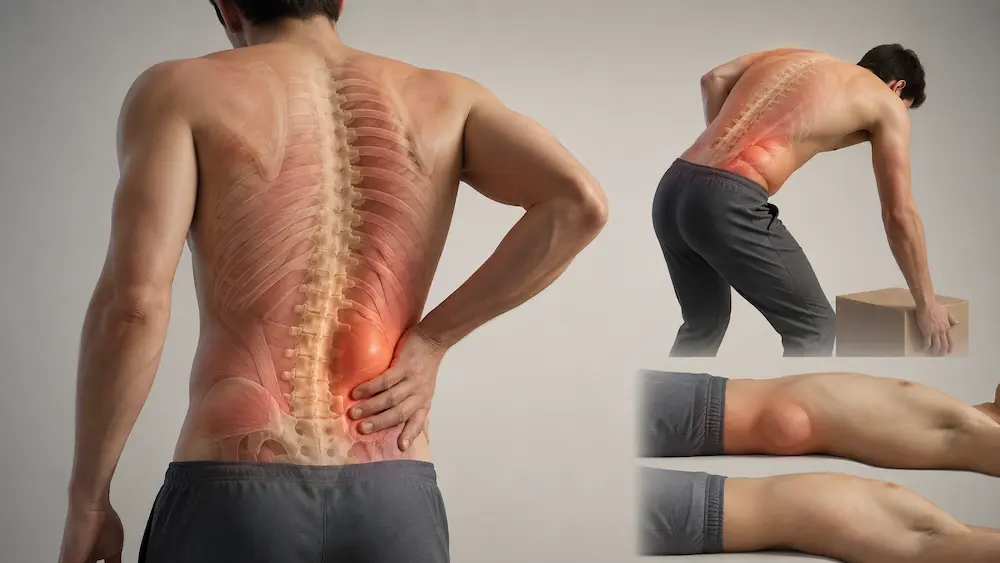
The symptoms of a lumbar hernia can vary depending on its size, location, contents, and whether complications have developed. Some patients may have only a noticeable swelling, while others experience pain or discomfort.
A Visible or Palpable Bulge
One of the most characteristic symptoms is a swelling in the lower back or flank. The bulge may become more noticeable when standing, increase with coughing or straining, become more prominent during physical activity, or reduce or disappear when lying down. A swelling that changes with position or pressure should be evaluated by a doctor.
Flank or Lower Back Discomfort
A lumbar hernia may cause discomfort around the lower back or side of the abdomen. The sensation may be described as aching, pressure, heaviness, pulling, or mild or moderate pain. The discomfort may become more noticeable after prolonged standing, lifting, coughing, or physical exertion.
Pain During Physical Activity
Activities that increase pressure inside the abdomen can make a lumbar hernia more symptomatic. These may include lifting heavy objects, coughing, sneezing, straining during bowel movements, exercise, or prolonged standing. Not every lumbar hernia causes pain, however. Some may remain relatively painless for a considerable period.
Feeling of Pressure or Fullness
Patients may experience a sensation of fullness or pressure in the flank or lower back. This can become more noticeable as the hernia gradually increases in size.
Gastrointestinal Symptoms
If part of the intestine becomes involved in the hernia, symptoms such as abdominal discomfort, nausea, vomiting, bloating, or changes in bowel movements may occur. These symptoms require prompt assessment, particularly when they develop suddenly.
Causes, Risk Factors, and Possible Complications
A lumbar hernia develops when tissue pushes through a weakened area of the posterior abdominal wall. Several factors can contribute to the development of this weakness.
Previous Surgery
One of the important causes of secondary lumbar hernias is previous surgery. Operations involving the flank, kidney, retroperitoneal region, or abdominal wall may weaken the muscles and connective tissues. Over time, this weakness can allow abdominal tissue to protrude.
Trauma
A significant injury to the back or flank can damage the abdominal wall. Even when the original injury has healed, a weakness may remain and gradually develop into a hernia.
Previous Infection
Infections affecting the abdominal wall or surgical wounds may compromise tissue strength and contribute to a later hernia.
Congenital Weakness
Some people may have naturally weaker areas in the abdominal wall, making them more susceptible to hernia formation.
Increasing Age
As people age, muscles and connective tissues can lose strength and elasticity. This may increase the likelihood of developing different types of hernias, including lumbar hernias.
Obesity
Excess body weight can increase pressure on the abdominal wall. It may also make the diagnosis and surgical management of a hernia more challenging. Maintaining a healthy weight can support overall abdominal wall health and may improve outcomes after surgery.
Chronic Cough
Repeated coughing increases intra-abdominal pressure. Individuals with long-standing respiratory conditions may therefore have an increased risk of developing or worsening a hernia.
Chronic Constipation and Straining
Repeated straining during bowel movements can increase abdominal pressure and contribute to the progression of an existing weakness.
Heavy Physical Exertion
Frequent heavy lifting or strenuous physical activity can increase intra-abdominal pressure. Although physical activity does not necessarily cause a hernia by itself, repeated strain may contribute to the enlargement of an existing defect.
Possible Complications of Lumbar Hernia
A lumbar hernia may remain stable for some time, but complications can develop.
Hernia Enlargement
A hernia may gradually become larger as the abdominal wall defect expands. A larger hernia can be more difficult to repair and may cause greater discomfort.
Incarceration
An incarcerated hernia occurs when the herniated tissue becomes trapped and cannot easily return to its normal position. This can cause pain and may lead to further complications.
Strangulation
Strangulation occurs when the blood supply to the trapped tissue is compromised. This can result in tissue damage and requires emergency surgery.
Bowel Obstruction
If a portion of the intestine becomes trapped within the hernia, it can interfere with the normal passage of intestinal contents. Symptoms may include severe abdominal pain, vomiting, abdominal distension, constipation, and inability to pass gas. Immediate medical evaluation is required if these symptoms occur.
How Is a Lumbar Hernia Diagnosed?
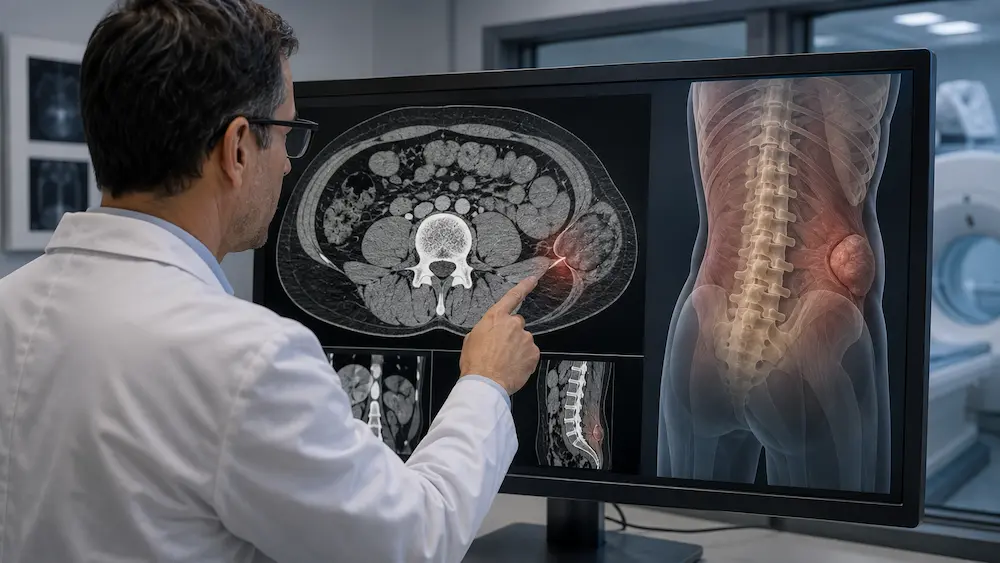
Because lumbar hernias are uncommon and may resemble other conditions, accurate diagnosis is important.
Medical History
The doctor will usually begin by asking about when the swelling first appeared, whether it changes with position, any pain or discomfort, previous abdominal or flank surgery, previous injuries, coughing or constipation, and changes in bowel function. This information can provide important clues about the cause and nature of the swelling.
Physical Examination
The surgeon may examine the area while the patient is standing, sitting, and lying down. The doctor may also ask the patient to cough or strain gently to determine whether the swelling becomes more prominent.
Ultrasound
Ultrasound may be useful for evaluating certain abdominal wall defects. It can help distinguish a hernia from other soft-tissue swellings in selected cases.
CT Scan
A CT scan is often particularly useful for evaluating lumbar hernias. It can provide detailed information about the location of the defect, the size of the hernia, muscles involved, contents of the hernia, surrounding anatomical structures, and possible complications. CT imaging can also help the surgeon plan the most appropriate repair.
Differential Diagnosis
A swelling in the back or flank does not necessarily represent a hernia. Other possibilities can include lipoma, muscle-related swelling, abscess, tumour, hematoma, or other abdominal wall abnormalities. Imaging and clinical examination help distinguish these conditions.
Treatment Options and Recovery After Lumbar Hernia Surgery
The appropriate hernia treatment depends on the patient’s symptoms, hernia size, risk of complications, overall health, and whether the hernia is primary or secondary. Some very small, asymptomatic hernias may be monitored under medical supervision. However, because lumbar hernias can gradually enlarge and may become more difficult to repair, the decision to observe rather than operate should be made after specialist evaluation. Patients should seek reassessment if the swelling increases, becomes painful, or develops other symptoms.
Surgical Repair of Lumbar Hernia
Surgery is the definitive treatment for symptomatic or complicated lumbar hernias in many patients.
The primary objectives of surgery are to:
- Return herniated tissue to its appropriate position
- Repair the abdominal wall defect
- Strengthen the weakened area
- Reduce the risk of recurrence
Open Lumbar Hernia Repair
In open repair, the surgeon makes an incision over the affected area to access the hernia. The contents are returned to the abdominal cavity and the defect is repaired. A surgical mesh may be used to reinforce the abdominal wall, particularly for larger defects or when additional reinforcement is appropriate.
Laparoscopic Lumbar Hernia Repair
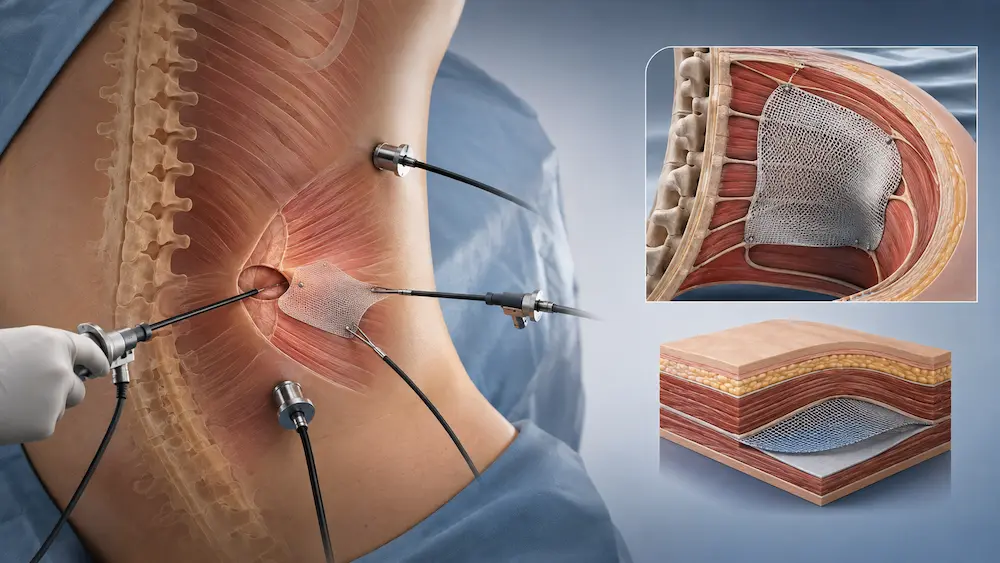
Minimally invasive surgery may be an option for selected patients. Through small incisions, the surgeon inserts a camera and specialized instruments to access the hernia. The defect can then be repaired and reinforced, often using mesh. Potential benefits of minimally invasive repair include smaller incisions, less postoperative discomfort, reduced wound-related problems in selected patients, faster mobilization, shorter hospital stay in appropriate cases, and an earlier return to daily activities.
The suitability of laparoscopic surgery depends on the size and location of the hernia, previous operations, the patient’s health, and the surgeon’s assessment.
Advanced Hernia Treatment at GEM Hospital Thrissur
For patients seeking hernia treatment in Thrissur, choosing a hospital with experienced surgeons, advanced minimally invasive capabilities, modern diagnostic facilities, and comprehensive postoperative care can make an important difference. GEM Hospital & Research Centre Thrissur offers a patient-focused approach to the evaluation and surgical management of hernia conditions.
GEM Hospital and Research Centre combines specialised surgical expertise with modern infrastructure to provide individualized treatment plans based on the type, size, location, and complexity of the hernia. For appropriately selected patients, minimally invasive techniques can help reduce surgical trauma, postoperative discomfort, visible scarring, and recovery time compared with conventional approaches. The hospital’s multidisciplinary environment is another important advantage. Patients can access coordinated support for preoperative evaluation, anaesthesia, imaging, surgery, postoperative monitoring, and follow-up care. This integrated approach can be particularly valuable for patients with previous abdominal surgery, complex hernias, or other medical conditions that need to be considered during treatment planning.
For those looking for dependable hernia treatment in Thrissur, GEM Hospital & Research Centre Thrissur offers the combination of experienced surgical care, advanced minimally invasive techniques, modern diagnostic support, and comprehensive patient-centered services needed for a safe and comfortable treatment journey.