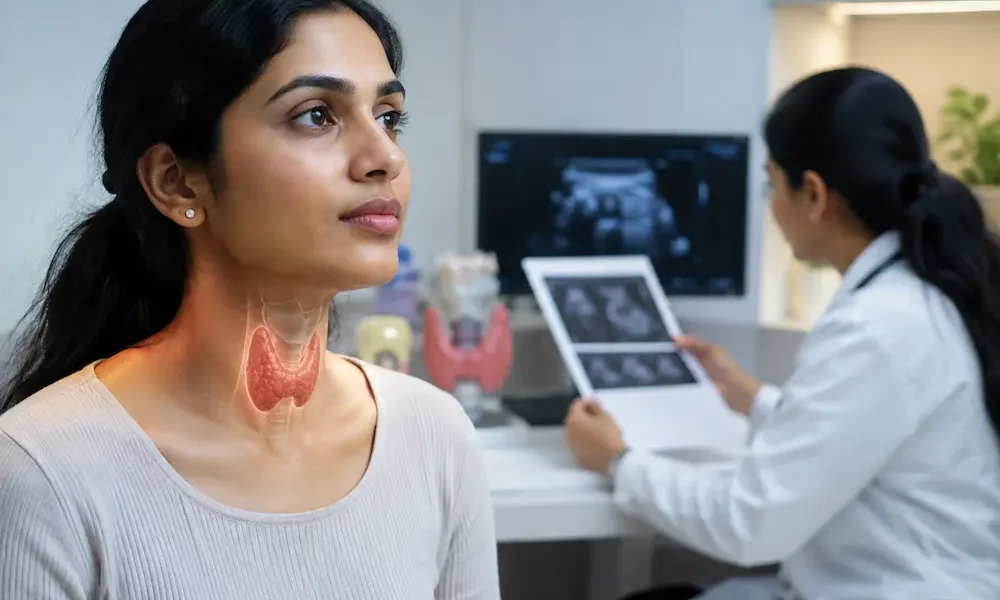
Thyroid disorders are among the most common endocrine conditions, affecting metabolism, energy, heart rate, and even mood. At GEM Hospital and Research Centre, Thrissur- an advanced laparoscopic and endoscopic surgery center- we offer comprehensive evaluation and modern, minimally invasive treatment options for thyroid problems, including endoscopic thyroidectomy for eligible patients.
What Does the Thyroid Gland Do?
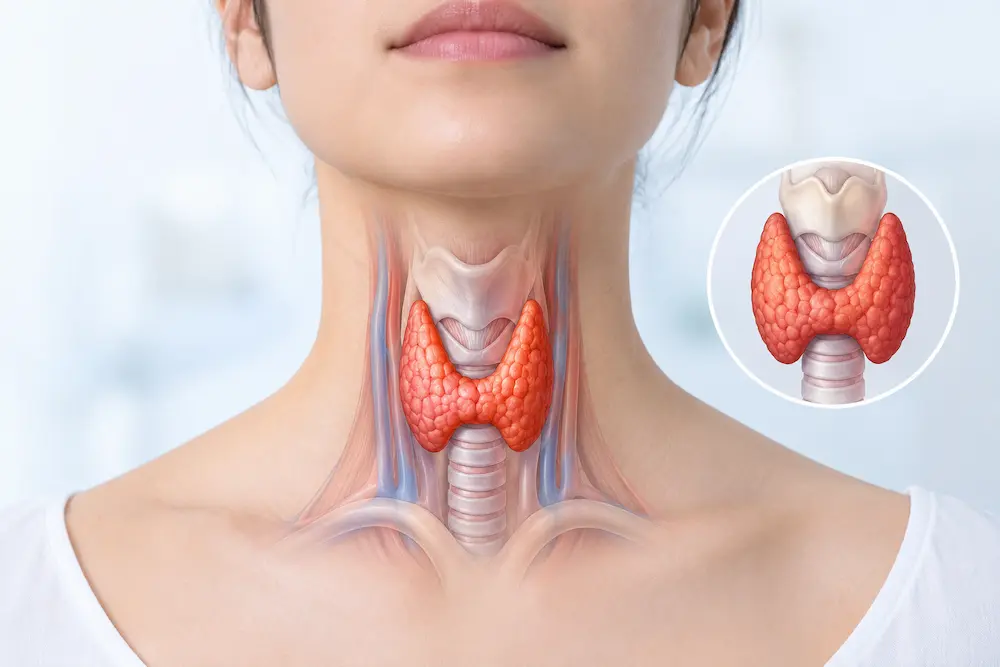
The thyroid is a small, butterfly-shaped gland in the front of your neck that produces hormones (mainly T3 and T4) which regulate how your body uses energy. These hormones influence:
- Metabolism and weight
- Heart rate and body temperature
- Digestion and muscle function
- Mood, sleep, and menstrual cycles
When the thyroid makes too little or too much hormone, it leads to hypothyroidism or hyperthyroidism- two opposite but equally important thyroid problems that need timely thyroid treatment.
Common Signs of Hypothyroidism and Hyperthyroidism
Because thyroid hormones affect nearly every organ, symptoms can be wide-ranging and sometimes mistaken for stress or aging. Recognizing the pattern helps in early diagnosis.

Hypothyroidism (underactive thyroid) often presents with “low and slow” features:
- Persistent fatigue and sluggishness
- Unexplained weight gain or difficulty losing weight
- Cold intolerance (feeling cold when others are comfortable)
- Dry skin, brittle hair, hair thinning
- Constipation
- Slow heart rate, hoarse voice
- Low mood, brain fog, memory issues
- Heavy or irregular periods
Hyperthyroidism (overactive thyroid) typically shows “hot and high” features:
- Unexplained weight loss despite normal/increased appetite
- Rapid or irregular heartbeat, palpitations
- Heat intolerance, excessive sweating
- Anxiety, irritability, restlessness, insomnia
- Tremors (shaky hands)
- Frequent bowel movements or diarrhea
- Thin, fragile skin; fine hair; sometimes a visible neck swelling (goiter)
If several of these symptoms cluster together, it’s wise to get thyroid function tests rather than attributing them to lifestyle alone.
What Causes Thyroid Disorders?
Thyroid problems arise from multiple causes; the most common are autoimmune, but other factors matter too.
- Autoimmune disease: Hashimoto’s thyroiditis (leading cause of hypothyroidism) and Graves’ disease (leading cause of hyperthyroidism).
- Iodine imbalance: Deficiency or excess can disrupt hormone production.
- Thyroid nodules: Benign or toxic nodules can overproduce hormone (toxic adenoma/multinodular goiter).
- Thyroiditis: Inflammation from infections, postpartum changes, or medications can cause transient hyper- or hypothyroidism.
- Previous treatment or surgery: Prior radioactive iodine or thyroid surgery can lead to hypothyroidism.
- Medications and other conditions: Lithium, amiodarone, pituitary disorders, and pregnancy-related changes can affect thyroid function.
Family history, female gender, and other autoimmune conditions increase risk, so a detailed history is part of good evaluation.
How is Thyroid Health Diagnosed?
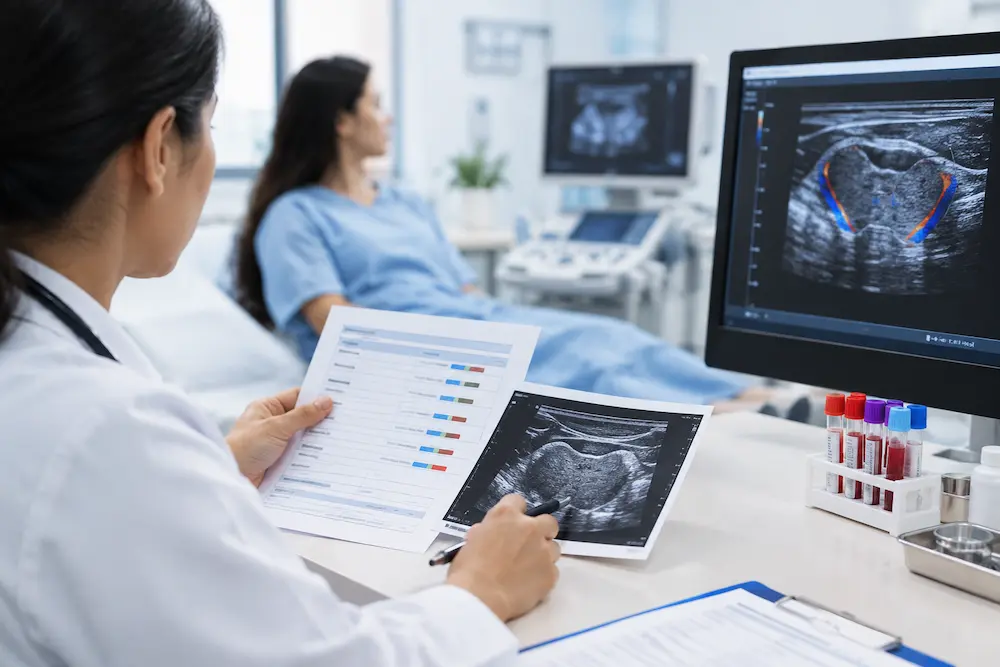
Diagnosis starts with a clinical assessment followed by targeted blood tests and imaging when needed.
- TSH (Thyroid-Stimulating Hormone): The primary screening test. High TSH suggests hypothyroidism; low TSH suggests hyperthyroidism.
- Free T4 (and sometimes Free T3): Confirms the type and severity. Low Free T4 with high TSH = overt hypothyroidism; high Free T4/T3 with low TSH = hyperthyroidism.
- Antibody tests: Anti-TPO (for Hashimoto’s) and TRAb/TSI (for Graves’) help identify autoimmune causes.
- Ultrasound: Evaluates gland size, nodules, and features suggestive of benign vs suspicious lesions.
- Fine-needle aspiration (FNAC): Performed for nodules with suspicious ultrasound features to rule out cancer.
At GEM Hospital and Research Centre, Thrissur, we coordinate endocrine evaluation with surgical planning when nodules, goiters, or cancer require operative management.
Treatment Options: Medication vs Surgery
Treatment depends on the specific disorder, severity, symptoms, age, pregnancy status, and patient preference.
For hypothyroidism:
- Levothyroxine (synthetic T4) is the standard, taken daily on an empty stomach. Dose is adjusted based on TSH, typically aiming for 0.4–4.0 mIU/L in most adults.
- Regular monitoring every 6–8 weeks initially, then annually when stable.
- Special considerations in pregnancy (dose often needs to increase) and in the elderly (start low, go slow).
For hyperthyroidism:
- Antithyroid medications (e.g., methimazole) to reduce hormone production; beta-blockers for symptom control (palpitations, tremor).
- Radioactive iodine (RAI): A common definitive therapy for Graves’ disease or toxic nodules in suitable candidates.
- Surgery (thyroidectomy): Preferred when there’s a large goiter, compressive symptoms, suspicious or cancerous nodules, medication intolerance, or patient preference for a rapid definitive solution.
The choice between medication, RAI, and surgery is individualized after discussing benefits, risks, recovery time, and long-term follow-up.
Endoscopic Thyroidectomy
Endoscopic thyroidectomy is a minimally invasive surgical option that uses small incisions and a camera (endoscope) to remove part or all of the thyroid with greater precision and less visible scarring. It is increasingly used for selected benign nodules, small cancers, and cosmetically sensitive patients.
Why consider endoscopic thyroidectomy?
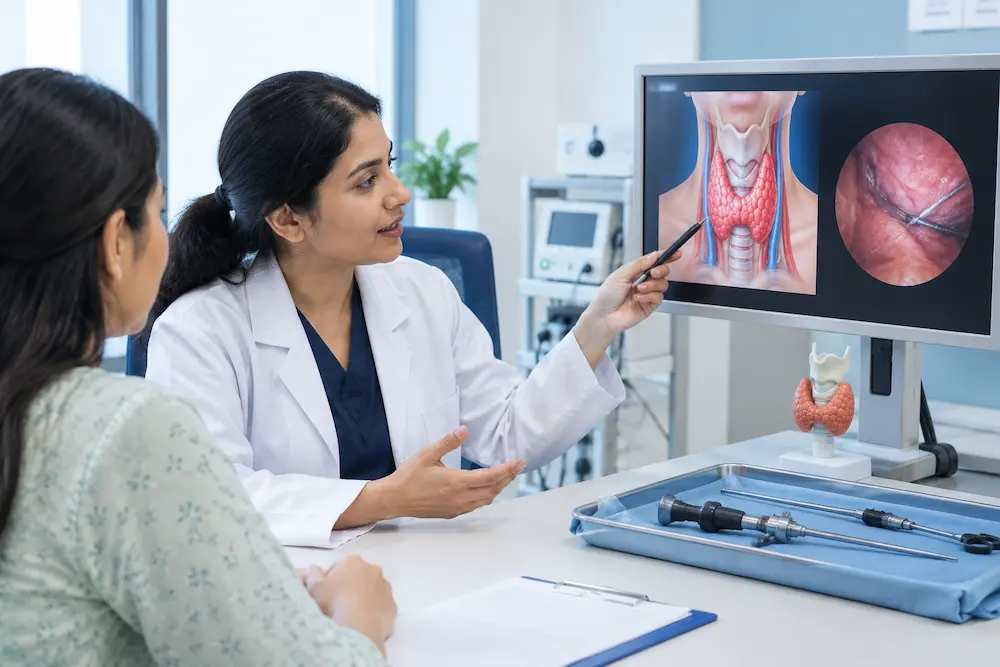
- Better cosmetic outcome: Smaller, hidden incisions (often in the neck crease, armpit, or submental area depending on approach).
- Less postoperative pain and quicker recovery compared to conventional open thyroidectomy.
- Comparable oncologic safety for appropriately selected papillary thyroid microcarcinomas, with thorough central lymph node dissection possible in experienced hands.
- Shorter hospital stay and faster return to daily activities (many resume normal routines in 1–2 weeks).
Who is a good candidate?
- Small to moderate-sized nodules or early-stage cancers without extensive invasion
- Patients prioritizing minimal scarring and faster recovery
- Cases evaluated and planned by an experienced endoscopic thyroid surgeon
As an advanced laparoscopic surgery center, GEM Hospital and Research Centre, Thrissur focuses on minimally invasive approaches where clinically appropriate, aligning with global evidence that endoscopic techniques can reduce pain, improve cosmesis, and maintain safety in selected patients.
When to See an Endocrinologist / Surgeon for Thyroid Concerns
Early specialist input improves outcomes and avoids complications. Consider seeing an endocrinologist or thyroid surgeon if you have:
- Persistent symptoms of hypo- or hyperthyroidism despite initial treatment
- Abnormal TSH/Free T4 results, especially if markedly high or low
- A palpable neck lump, rapidly enlarging goiter, or compressive symptoms (difficulty swallowing, breathing, or voice changes)
- Thyroid nodules on ultrasound, particularly with suspicious features
- Known or suspected thyroid cancer, or a family history of thyroid malignancy
- Planning pregnancy with existing thyroid disease, or new thyroid issues during pregnancy
- Recurrent hyperthyroidism or intolerance to antithyroid medications
- Interest in minimally invasive options like endoscopic thyroidectomy and want a surgical opinion
At GEM Hospital and Research Centre, Thrissur, our team integrates medical management with advanced surgical solutions, including endoscopic thyroidectomy, to deliver personalized thyroid treatment for complex thyroid problems.